





Kanela B Complex – Key Facts at a Glance
- Unlike other vitamins, vitamin B is not a single nutrient but is divided into many individual vitamins.
- All of these individual vitamins support vital functions in the human body.
- It can often be a bit of a hassle to eat in a way that ensures you get enough of all the essential B vitamins every day.
- Kanela B Complex tablets are a good alternative.
By eating a balanced diet, we ensure that we provide our bodies with all the vitamins and nutrients necessary for life. However, it’s not always easy to eat a balanced diet; there are many factors that lead us to make poor dietary choices. Stress and work are often at the top of the list. But why not give yourself a little help with dietary supplements?

There's nothing wrong with vitamin capsules like B-complex
Nothing can replace fresh vitamins—or so people thought for a long time. The body can absorb and process them immediately—properties that people were long reluctant to attribute to vitamins in tablet form. However, it is now well established that the body also quickly absorbs vitamins found in capsules and other forms and uses them where they are needed.
Of course, fresh fruit has the advantage of not only meeting your vitamin needs but also satisfying your hunger and—depending on the type of fruit—usually providing your cells with fluids as well. However, there’s nothing wrong with vitamin supplements like Kanela B-Complex Tablets (100 count) —quite the opposite, in fact. Like most fruits and vegetables, these contain not only a specific B vitamin in large quantities, but all the vitamins in the B complex plus other valuable nutrients.
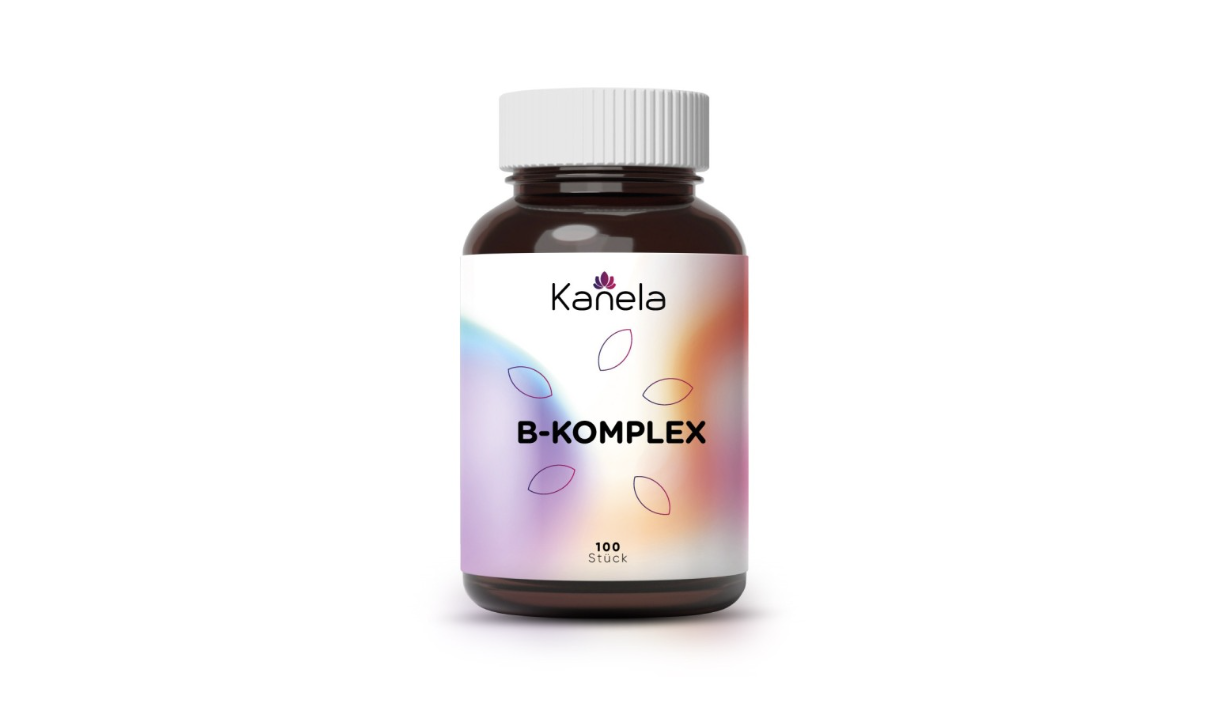
The full range of the vitamin B complex is included
These nutrients include choline and inositol. While choline is important for liver health and fat metabolism and also supports many brain functions, inositol aids in metabolism—and can also have a positive effect on our mood.
In addition to these two nutrients, the tablets contain the full range of the vitamin B complex. Read the overview below to learn which vitamins are included and what bodily functions they are essential for.

From B1 to B12—An Overview of the B Complex Vitamins
Vitamin B1, also known as thiamine, contributes to a healthy nervous system and proper energy metabolism, and also supports muscle and heart function. B2 (riboflavin) helps break down fats, proteins, and carbohydrates, and is beneficial for healthy skin and cellular health. Vitamin B3 (niacin), in turn, supports digestion, nerve function, and energy production, and regulates skin health, while B5 (pantothenic acid) promotes the formation of neurotransmitters and contributes to the breakdown of carbohydrates and fat—and thus to the body’s energy production.
Vitamin B6, also known as pyridoxine, serves three functions: It contributes to a healthy nervous system, supports hormonal balance, and aids in protein synthesis. Vitamin B7 (biotin) is essential for the health of our nails, skin, and hair, while B9 (folic acid) promotes cell growth—which is immensely important for pregnant women to support their baby’s development. Finally, vitamin B12, also known as cobalamin, stimulates the production of red blood cells, which transport oxygen to the cells. It also supports our nervous system.


